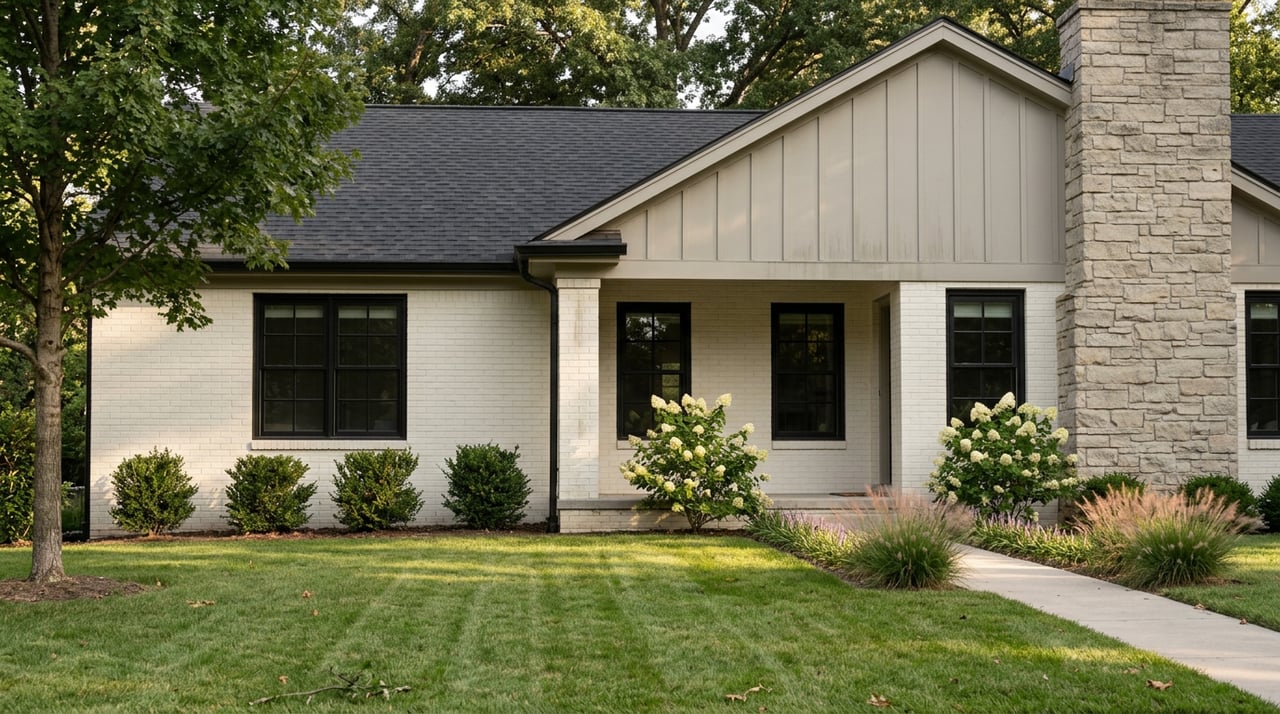
Cumming GA Home Prices 2026: What the Data Really Shows
August 13, 2026
August 13, 2026
Which number is Cumming's real 2026 home price story: down 15.6%, down 8.5%, down 3.72%, or down 1.4%?
All four showed up in market data covering roughly the same stretch of this year. All four claim to describe the same city. None of them can be describing the same houses, because a market cannot lose value at four different speeds at once. What's actually happening is that each number is measuring a slightly different slice of the market, and the gap between them is where the useful information lives. If you're comparing Cumming to Alpharetta or Milton right now, or trying to figure out what your own Forsyth County home is worth, that gap matters more than any single headline figure.
Here's what each source actually measured, and over what window.
| Metric | Window | Change | Value |
|---|---|---|---|
| Median sold price (Redfin) | 3 months ending May 2026 vs. same period 2025 | -15.6% | $550,000 |
| Median price per square foot (Redfin) | Same window | -8.5% | $237/sqft |
| Median listing price, Forsyth County (FRED) | May 2026 to June 2026 | -1.4% | $679,500 |
| Median listing price, Cumming citywide (Realtor.com) | Trailing year, reported mid-July 2026 | -3.72% | $671,383 |
Read the sold-price line and the price-per-square-foot line together and you get the first real clue. If the same homes were simply losing 15.6% of their value, price per square foot should have fallen by roughly the same amount. It didn't come close. That gap between -15.6% and -8.5% almost always means the mix of homes that sold changed, not that identical houses got dramatically cheaper.
Then look at the listing prices. What sellers are asking, per Realtor.com's citywide figure, is down under 4% year over year. What buyers actually paid, per Redfin's sold-price figure, is down four times that much. Asking prices and closing prices don't usually diverge by that much in a market that's simply cooling evenly. They diverge when a wave of different, lower-priced product enters the closed-sale column.
Cumming isn't building the same kind of home it was building three years ago, and it isn't building it in the same place.
The growth story for years centered on Halcyon, the mixed-use village RocaPoint Partners developed off GA-400 near Exit 12, with retail, a food hall, and a direct connection to the Big Creek Greenway. Halcyon pulled buyers who wanted walkability and were willing to pay for it, and homes near it have carried a premium for that reason.
The newer story is happening farther north. A project known locally as The Crossing at Coal Mountain has been delivering phases throughout 2026, and it's being talked about as doing for North Forsyth what Halcyon did for the southern part of the county: giving a previously quieter stretch its own center of gravity. North Forsyth also has more room for the kind of active-adult product that's been in high demand, including a 55+ community called Sonnie Village.
None of that is a coincidence when you look at the price data. New construction in the northern part of the county tends to land at a lower price point than the established resale stock closer to Halcyon or downtown Cumming. When more of those closings show up in a given three-month window, the median sold price drops even if not a single existing homeowner's equity actually changed. That's compositional shift, and it's a completely different story than a market losing value.
There's a second mechanism working in the same direction, and it has to do with how builders are competing right now rather than with what's getting built.
With Freddie Mac's 30-year fixed rate sitting at 6.55% as of July 16, 2026, most buyers are shopping their monthly payment, not the sale price on paper. Builders in communities like Ardan on Lanier and Highlands at Sawnee Mountain have leaned into that by offering rate buydowns and closing cost credits rather than cutting the advertised price. A buydown lowers what a buyer pays every month without touching the number that shows up in county records as the list price, and it means the builder's own price doesn't get logged as a comp that could drag down the neighbor's next appraisal.
The buyer still closes at a price that reflects a real discount. The sold-price data captures that discount. The listing-price data, which is what most portals headline first, doesn't fully see it. That's a second reason the sold-price decline outruns the asking-price decline, on top of the mix shift from new construction.
For an existing homeowner watching the citywide median fall, this matters. Your home didn't get a rate buydown attached to it when it was built five or ten years ago. The mechanism pulling the median down doesn't touch your equity the way the headline number implies.
City-level medians blend three ZIP codes that don't behave the same way. Realtor.com's mid-July 2026 data broke it out:
Notice these aren't wildly different. A $70,000 spread between the low and high ZIP, and a six-day spread in days on market, is a market that's holding together reasonably well at the neighborhood level. Nothing in that table looks like a 15% collapse. If you're pricing a listing or evaluating an offer, this is the table to pull up, not the citywide median.
A median that mixes a Coal Mountain spec home with a resale on an established Cumming cul-de-sac was never going to tell either seller anything useful about their own house.
The last piece of the puzzle is that homes are actually moving faster this year, not slower. Redfin's three-month window showed homes selling in about 58 days, down from 72 days over the same period a year earlier. In a market where the popular narrative is "prices are falling," faster sales look like a contradiction.
It fits once you account for the same two mechanisms. New construction with a builder incentive attached tends to move once it's marketed correctly, because the payment math is already solved for the buyer walking in the door. And resale sellers who are pricing against current, realistic comps rather than testing an old number get real offers sooner instead of sitting through a round of price cuts. Both patterns shorten the average without requiring the whole market to have softened by 15%.
If you own a resale home in an established Cumming neighborhood, the citywide median is not your comp. Pull price per square foot for your specific ZIP and street, and treat the 15.6% figure as a description of the overall closing mix, not a forecast for your equity.
If you're comparing Cumming to Alpharetta or Milton as a relocation target, the headline decline makes Cumming look softer than it is. The actual spread between ZIP codes tells you more about what a given budget buys in a given part of the county than the citywide number ever will.
If you're a buyer weighing new construction against resale, ask any builder directly what their buydown or credit is worth in real dollars, and compare that total against a comparable resale listing's actual asking price. The two numbers you see on a portal rarely tell you which one is the better deal until you do that math yourself.
Does a 15% drop in the citywide median mean my home lost 15% of its value? Not on its own. The gap between the sold-price decline and the much smaller price-per-square-foot decline suggests the mix of homes selling changed more than any individual home's value did. Your ZIP-level comps are the better read.
Should I wait for rates to drop before listing? Freddie Mac's rate sat at 6.55% in mid-July 2026, and rates move on broader economic conditions, not on a seasonal calendar. Waiting for a rate drop is a bet, not a strategy, and it doesn't change what your specific ZIP's comps say about pricing today.
How do I know if a builder incentive is a better deal than a resale listing at a lower price? Ask for the incentive's dollar value in writing, whether it's a rate buydown or closing cost credit, and run it against the resale home's actual number. The one that lowers your real monthly payment and total cash to close is the better deal, regardless of which sticker price looks lower.
Numbers this scattered are exactly the kind of thing worth walking through with someone who tracks Forsyth County closings block by block rather than city by city. If you're weighing a move in or out of Cumming this year, or trying to price a listing against a market that's telling four different stories at once, The Granigan Group can pull the comps that actually apply to your street. Schedule a free consultation and we'll go through what your specific ZIP code is really saying.
Stay up to date on the latest real estate trends.

We pride ourselves in providing personalized solutions that bring our clients closer to their dream properties and enhance their long-term wealth. Contact us today to discuss all your real estate needs!
The Granigan Group
8000 Avalon Blvd Alpharetta, GA 30009