Relocating To Roswell: What New Residents Need To Know
April 2, 2026
April 2, 2026
Thinking about a move to Roswell? You are not alone. This North Fulton city continues to attract buyers who want established neighborhoods, strong community resources, and convenient access to the broader Atlanta area. If you are planning a move, knowing how Roswell works day to day can help you make better decisions about housing, budgeting, commuting, and settling in. Let’s dive in.
Roswell sits just north of Atlanta and covers 40.72 square miles, with an estimated population of 92,227 as of July 1, 2024, according to the U.S. Census QuickFacts for Roswell. It has the feel of a well-established suburb with a strong local identity, while still connecting you to major job centers across North Atlanta.
For many buyers, Roswell offers a balance that can be hard to find. You get a city with a distinct historic core, broad suburban housing options, extensive parks, and access to major roads, all in one location.
If you are relocating to Roswell, one of the first things to understand is that the housing stock is not one-size-fits-all. The market includes single-family homes, townhouses, and condos, which can give you more flexibility depending on your budget, maintenance preferences, and lifestyle needs.
Recent pricing places Roswell firmly in the upper-mid market. Zillow reported an average home value of $646,554 as of February 28, 2026, while Redfin reported a median sale price of $645,000 in February 2026, with median days on market at 47. Those figures come from different methodologies, but together they suggest a market where buyers should be prepared for home values in the mid-$600,000 range.
Roswell is also a strongly owner-occupied community. The Census reports a 71.9% owner-occupied housing rate, a median owner-occupied home value of $567,100, median monthly owner cost with a mortgage of $2,584, and median gross rent of $1,810. That can be useful context as you compare renting versus buying during your transition.
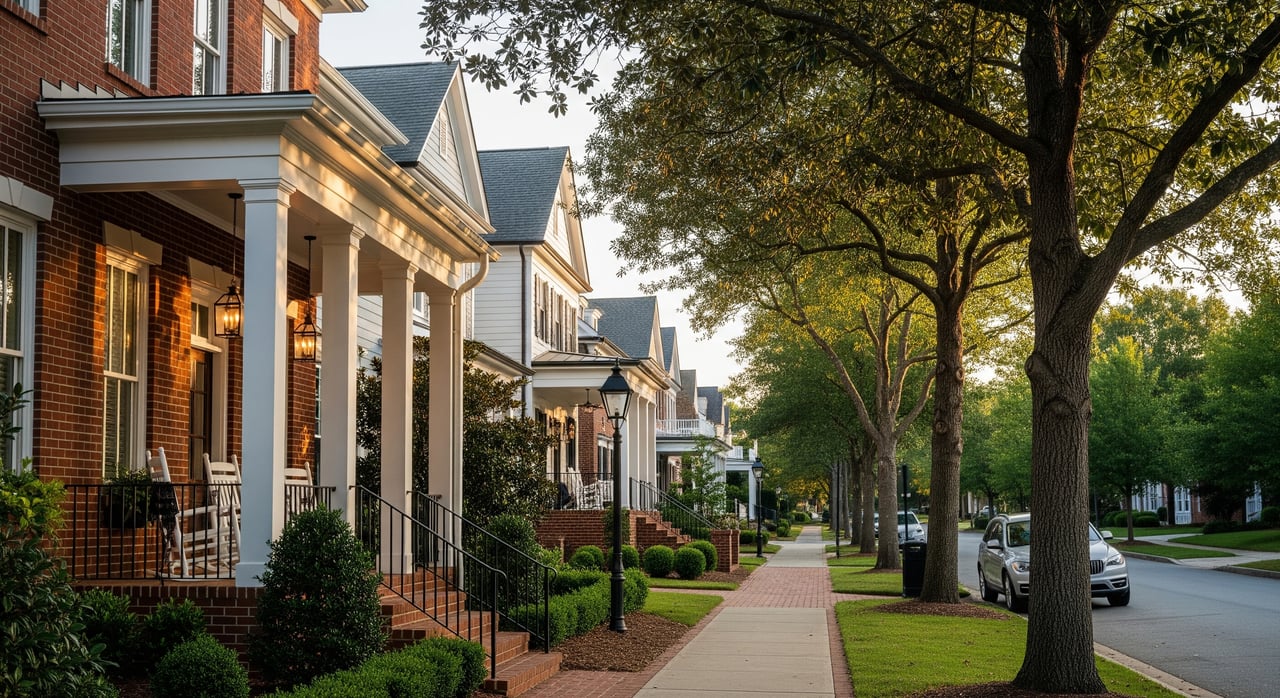
Roswell’s downtown and historic district are a major part of its identity. The city’s Historic District Master Plan reflects a preservation-focused approach, and the city highlights the Southern Trilogy historic house museums: Barrington Hall, Bulloch Hall, and Smith Plantation.
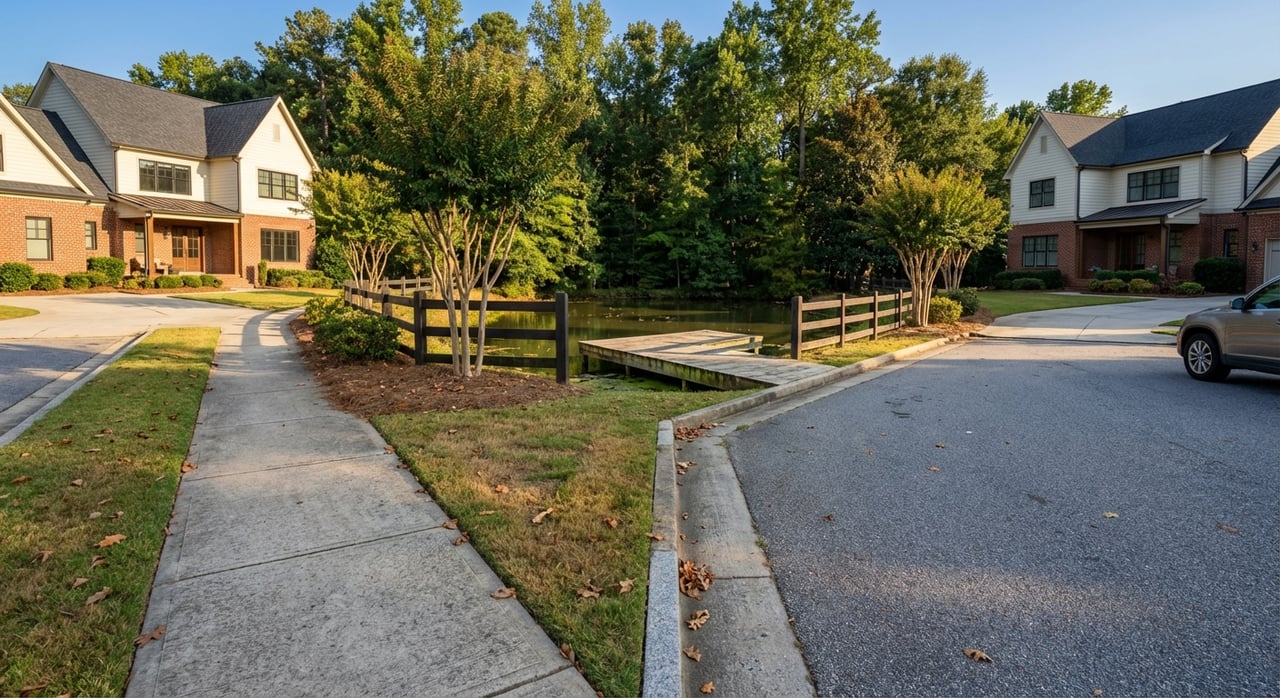
For you as a buyer, that means Roswell can offer different living experiences depending on where you search. Near Town Square and the historic core, you may find more established character and proximity to civic and cultural destinations. Farther from downtown, you are more likely to find conventional suburban neighborhoods and a wider range of newer or more traditional single-family options.
If you are financing your purchase, timing matters. The Consumer Financial Protection Bureau’s preapproval guidance says preapproval helps you shop more confidently, and preapproval letters commonly expire in 30 to 60 days.
The closing process also takes planning. CFPB states that your lender must provide the Closing Disclosure three business days before closing, and it recommends contacting your lender or closing agent at least a week before closing to confirm delivery. Because some Southern states require a closing attorney, it is smart to line up local closing support early in the process.
Before you make an offer in Roswell, it helps to verify address-specific details that can affect both cost and convenience.
Roswell homeowners pay property taxes to three entities: Fulton County, Fulton County Schools, and the City of Roswell. The city states that its current millage rate is 4.949 for tax year 2025, and city taxes make up about 16% of a resident’s total property tax bill. You can review details on the city’s property tax page.
If you will use the home as your primary residence, pay attention to exemption deadlines. Roswell says homestead exemption applications are accepted from January 1 through June 1. That is a small step that can matter as you build your long-term ownership budget.
Your commute can shape your daily experience as much as your home itself. The Census reports a mean travel time to work of 26.9 minutes for Roswell residents, but your actual drive will depend heavily on where you live and where you work.
Roswell notes that the city sits at the convergence of five state routes and is an important link to SR 400. The city also says Holcomb Bridge Road is Roswell’s only GA-400 access point and carries more than 70,000 vehicles per day. That makes road access and traffic patterns a practical part of your home search, especially if you commute by car several days a week.
Transit exists in Roswell, but it is more limited than in rail-served areas closer to the urban core. The city’s transit information lists MARTA bus routes 85, 185, and 142, and identifies the Mansell Road Park & Ride as the closest park-and-ride lot. These routes operate every day from about 5:00 a.m. to 1:00 a.m., with 30-minute service during weekday peak times and 40-minute headways at other times.
Roswell also supports biking and walking more than many people expect. The city reports nearly 204.8 miles of sidewalk and 19.2 miles of multi-use paths or trails, with a network designed to connect parks, schools, the Historic District, and the Chattahoochee River. So while driving still plays a major role, some parts of Roswell may offer better day-to-day connectivity than a typical car-dependent suburb.
One reason many buyers feel at home in Roswell quickly is the depth of local amenities. Roswell Recreation, Parks, Historic & Cultural Affairs maintains more than 900 acres of parkland, 19 parks, three dog parks, and the city’s historic house museums.
The city also hosts multiple special events throughout the year and maintains the free Roswell365 community calendar. For a newcomer, that can make it easier to plug into local life, explore public spaces, and get a feel for the rhythm of the city after your move.
If schools are part of your move, it is important to verify assignment by address. Fulton County Schools says it serves about 89.6K students in 104 schools, and Roswell includes public high schools such as Roswell High School and Centennial High School. You can explore district information through Fulton County Schools.
The key takeaway is simple: do not assume a school assignment based on a mailing address or subdivision name alone. Always confirm the exact attendance information for the property you are considering.
Utility setup in Roswell is not always identical from one address to the next. The city’s water utility information says Roswell serves about 5,600 customers, but some addresses use Fulton County water and sewer instead.
The city’s sanitation division provides weekly curbside household garbage collection, and Roswell also partners with Gas South to offer residents a 2-cent-per-therm discount on standard rate plans. Before move-in day, confirm which services apply to your address so you are not scrambling at the last minute.
Not every buyer thinks about floodplain review early enough, but it can be an important part of due diligence in Roswell. The city’s floodplain management resources direct homeowners to risk-mapping tools and advise owners to check with city staff before altering property in or near a floodplain.
If a home is near the river, a creek, or a low-lying area, ask questions early. That gives you a clearer picture of insurance considerations, property use, and any future improvement limits tied to the site.
Once you close, a few quick tasks can make your transition much smoother.
If you are planning a move to Roswell, the right guidance can save you time, reduce stress, and help you focus on neighborhoods and homes that truly fit your goals. When you are ready for a personalized plan and local insight, connect with Chrissy Granigan for a warm, high-touch approach to your North Atlanta move.
Stay up to date on the latest real estate trends.
We pride ourselves in providing personalized solutions that bring our clients closer to their dream properties and enhance their long-term wealth. Contact us today to discuss all your real estate needs!
The Granigan Group
8000 Avalon Blvd Alpharetta, GA 30009